House and land package valuation in Australia
A house and land package valuation assesses the land and the proposed or completed dwelling using the evidence available at the valuation date. Because the land purchase and building contract are often separate, a lender may value the project at more than one stage. The contract total is not automatically the completed market value, and buyers should allow for site costs, variations, delays and a possible valuation shortfall.
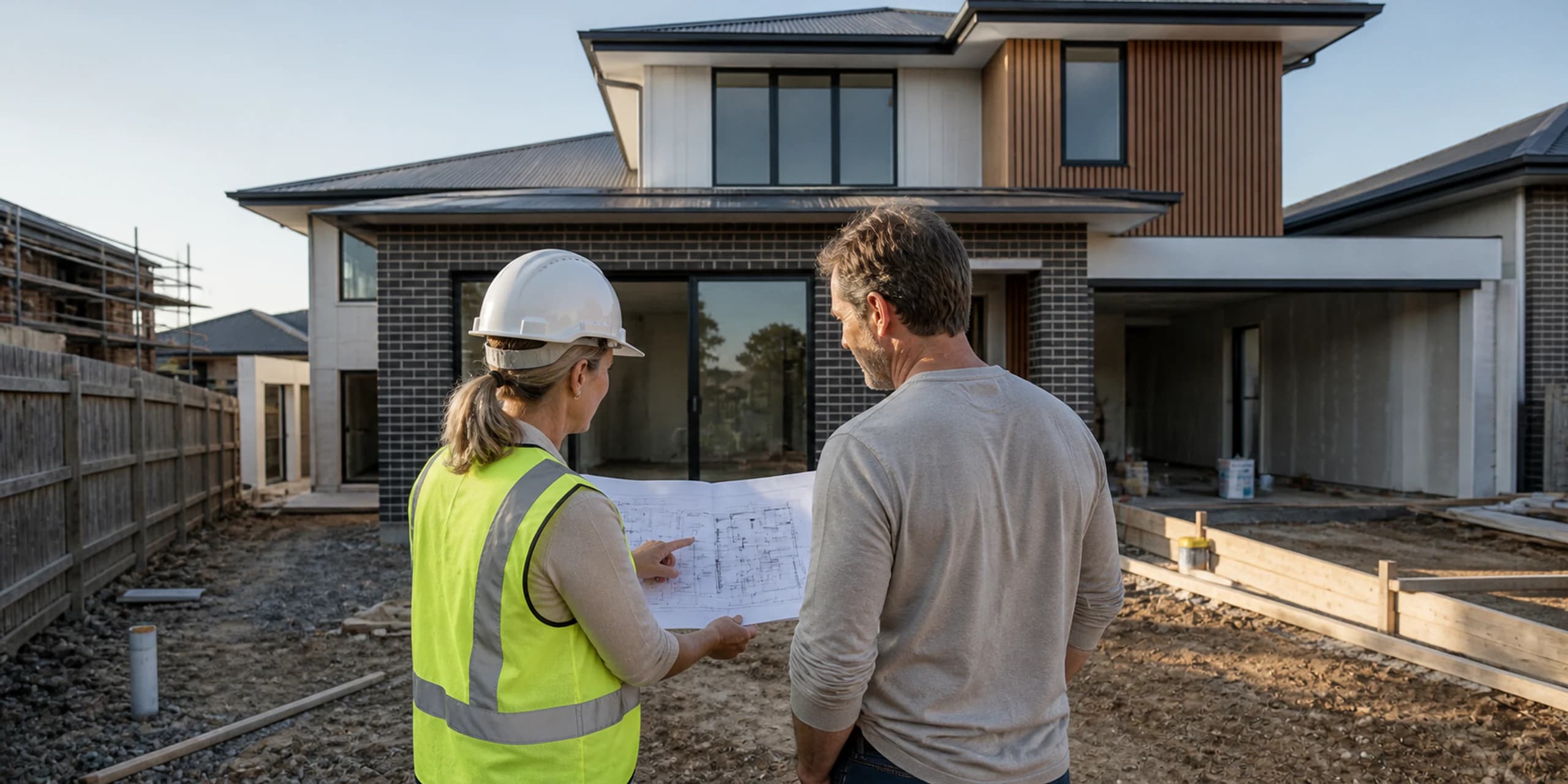
A house and land package valuation assesses the land and the proposed or completed dwelling using the evidence available at the valuation date. Because the land purchase and building contract are often separate, a lender may value the project at more than one stage. The contract total is not automatically the completed market value, and buyers should allow for site costs, variations, delays and a possible valuation shortfall.
How a House and Land Package Works
A house and land package commonly involves:
- a contract to buy the land
- a separate contract with a builder
- staged payments as construction progresses
The NSW MyHome Planner notes that land and building are usually separate contracts and can be treated separately by a bank. Processes differ between states, lenders and developments, so the contracts and finance approval should be checked before signing.
What the Valuation Assesses
The valuer may be instructed to assess one or more of these interests:
- land value before construction
- value on an as-if-complete basis
- value at a construction stage
- completed market value
- market rent for the completed property
An as-if-complete valuation assumes the home is completed according to the plans and specifications provided. It is conditional on that work being delivered. A completed valuation can reflect the actual improvements, condition and market evidence at that later date.
Documents Usually Needed
Accurate documents reduce uncertainty. The valuer or lender may request:
- signed land contract
- building contract
- plans, elevations and floor areas
- schedule of finishes and inclusions
- specifications
- site-cost estimates
- approved variations
- planning and building approvals
- title or proposed lot details
- evidence of deposits and incentives
- expected completion timing
If a feature is not shown in the plans or specifications, it may not be included in the assessed completed property.
Contract Cost Is Not Market Value
The total paid for land and construction includes costs that buyers may not fully recover on resale. It can include:
- developer or builder margin
- site preparation
- upgrades selected for personal preference
- finance and holding costs
- landscaping, fencing and driveways
- variations after contract
- taxes and transaction costs
Market value reflects what buyers would pay for the completed property at the valuation date, supported by comparable evidence. A $40,000 upgrade does not automatically add $40,000 to value.
How Comparable Sales Are Selected
For the land component, the valuer may consider sales of similar lots with comparable size, position, shape, services and planning controls.
For the completed property, useful sales may include new or near-new homes with similar:
- land area
- building size
- bedroom and bathroom count
- garage and outdoor areas
- quality and finish
- estate location
- completion date
- local buyer appeal
Developer list prices and current listings can provide context, but settled sales usually provide stronger evidence of what buyers paid.
Why a Valuation Shortfall Can Occur
Market movement
Land or completed-home evidence may change between contract date and valuation.
Upgrades that exceed local demand
Premium finishes may cost more than buyers in the estate are prepared to pay.
High site costs
Rock removal, retaining, slope or servicing can add construction cost without an equivalent increase in market value.
Incentives and rebates
Headline package prices may include incentives that are not reflected in ordinary comparable sales.
Incomplete external works
Landscaping, fencing, driveway or other items may be outside the building contract but expected by buyers of completed homes.
Oversupply
A large estate can release many similar homes at once, giving buyers alternatives and limiting scarcity.
Documentation gaps
Missing plans, specifications or variations may prevent the valuer from recognising intended improvements.
Progress Payments and Valuation Stages
Building contracts usually divide construction into stages. The lender may release funds after evidence that a stage is complete. NSW guidance on the build phase explains that owners should understand progress payments and monitor the work.
A progress inspection or lender check is not necessarily a fresh market valuation. It may simply confirm that enough work has been completed for the next payment. Ask the lender what each inspection is designed to establish.
The Effect of Variations and Delays
A variation can change cost, completion time and the finished property. Keep signed documentation and give material updates to the lender. Unapproved or undocumented work may not be recognised.
Delays can increase rent, interest and other holding costs. They can also move the completion valuation into a different market. Contract remedies and extension rights depend on the documents and applicable law, so legal advice is important when delays become material.
Before Signing a Package
Check:
- 1.Whether land and build contracts are conditional on each other.
- 2.What finance approval covers.
- 3.Which site costs are fixed and which are allowances.
- 4.What is excluded from the build price.
- 5.Whether the plans match the advertised package.
- 6.The process and cost for variations.
- 7.Sunset, delay and termination clauses.
- 8.Progress payment timing.
- 9.A contingency for extra costs and valuation risk.
- 10.Comparable completed sales in the estate.
NSW Fair Trading publishes guidance on home building contracts. Buyers elsewhere should use the relevant state or territory regulator.
At Completion and Handover
Inspect the completed home, record defects and confirm that required certificates and approvals have been issued. The NSW post-build guidance describes the final handover stage and the importance of documentation.
A completed valuation should use the actual property and current evidence. If finishes, floor area or external works differ from the original assumption, the value may differ from the earlier as-if-complete figure.
Where Valato Fits
A Valato valuation can assist with supported market-value decisions when adequate documentation and evidence are available. Complex construction, unusual land, incomplete works or a lender-specific purpose may require an in-person valuer or the lender’s own panel. Confirm acceptance before ordering.
Frequently asked questions
Is the package price the same as the completed value?
No. The package price is a contract cost. Completed market value depends on the final property, market conditions and comparable sales.
Why does the lender value the property more than once?
The lender may assess land, as-if-complete value and construction progress at different stages to manage its security and loan releases.
Do variations add their full cost to value?
Not necessarily. Buyers may not pay dollar for dollar for upgrades, particularly where the selections exceed local expectations.
What happens if the valuation is lower than the contract total?
The lender may reduce funds or change conditions. Review the figures, contracts and options promptly with the lender, broker and legal adviser.
Can an online estimate value an unbuilt house?
An estimate may use plans and comparable properties, but uncertainty is higher before completion. The purpose may require a valuer and detailed documentation.
General information only: This article is general in nature and does not take into account your individual circumstances. It should not be relied on as legal, building, credit, financial or investment advice. Seek qualified advice before signing or changing a contract.
Need evidence of your property’s current market value?
Compare Valato’s property valuation options and choose the level of evidence that suits your purpose.
Compare valuationsRelated articles.

Commercial fit-outs and property value in Australia
What a commercial fit-out includes, who may own it, and how lease terms, make-good obligations and market demand affect property value.
Kerbside valuations: how drive-by valuations work
How an external-only inspection works, what it can and cannot reveal, and how kerbside valuations compare with desktop and full valuations.

How location affects property value in Australia
The location factors that shape property value, from access and schools to street position, supply, planning and environmental risk.
Need evidence of your property’s current market value?
Compare Valato’s property valuation options and choose the level of evidence that suits your purpose.
Need evidence of your property’s current market value?
Compare Valato’s property valuation options and choose the level of evidence that suits your purpose.