How population growth affects property values in Australia
Population growth and property values are linked through housing demand. Population growth can support property values by increasing the number of households that need somewhere to live. Its effect is strongest where new housing supply cannot keep pace and where people have the income and borrowing capacity to compete for available homes. Growth alone does not guarantee higher prices. Jobs, infrastructure, dwelling type, credit conditions and local supply still determine whether extra demand translates into higher values.
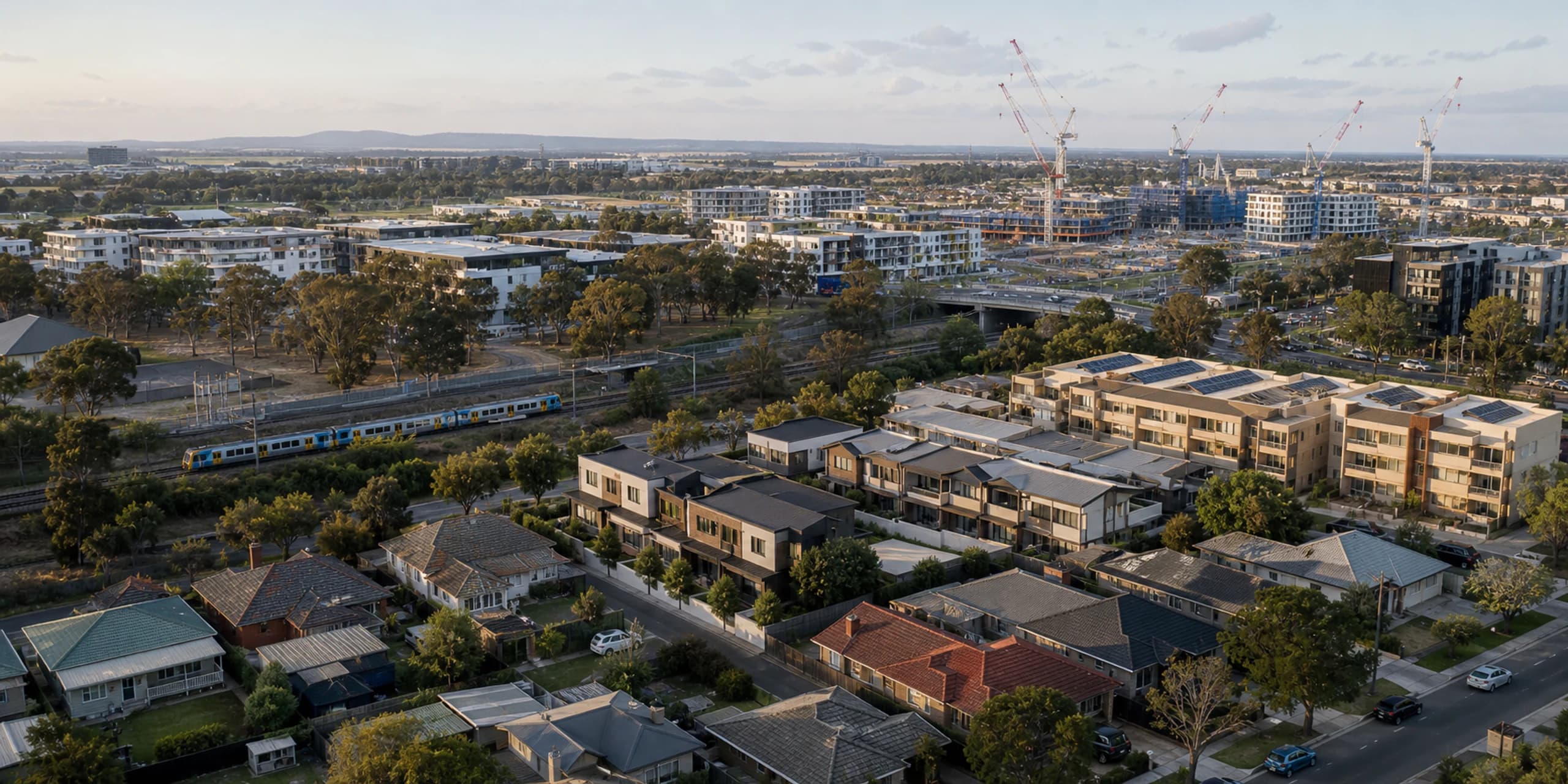
Population growth and property values are linked through housing demand. Population growth can support property values by increasing the number of households that need somewhere to live. Its effect is strongest where new housing supply cannot keep pace and where people have the income and borrowing capacity to compete for available homes. Growth alone does not guarantee higher prices. Jobs, infrastructure, dwelling type, credit conditions and local supply still determine whether extra demand translates into higher values.
Australia’s Population Growth in Context
Australia’s population reached 27.8 million at 31 December 2025, according to the Australian Bureau of Statistics. The population grew by about 412,500 people, or 1.5%, over the year. Net overseas migration contributed about 301,000 people.
Those national figures provide useful context, but property is valued locally. A city, suburb or regional centre can grow faster or slower than the country as a whole. The type of households arriving also matters. Students, families, downsizers and skilled workers do not all demand the same housing.
How Population Growth Can Lift Property Values
Population growth affects the housing market through a chain of demand:
- 1.More people form households and need homes.
- 2.Some households rent while others seek to buy.
- 3.Competition increases if suitable dwellings are scarce.
- 4.Rents or sale prices may rise until supply, affordability or household preferences adjust.
The Reserve Bank of Australia identifies population and average household size as important drivers of underlying demand for housing. It also notes that supply can respond slowly because planning, finance and construction take time.
This lag helps explain why a rapid increase in local population can initially appear in rental vacancy, asking rents and buyer competition before it produces a large volume of new housing.
Why More People Do Not Automatically Mean Higher Prices
Population growth is only one input. Property values may remain flat or fall when:
- developers deliver enough new dwellings for the households arriving
- buyers cannot borrow enough at current interest rates
- employment or income growth is weak
- new residents prefer rental accommodation rather than buying
- growth is concentrated in a different dwelling type or location
- a suburb has environmental, planning or infrastructure constraints that reduce demand
National population growth can coincide with different price movements across Australia. The RBA’s August 2026 economic assessment reported that average housing prices had fallen from their March peak, while movements differed by city and region. This is a reminder that one national trend does not determine the value of an individual property.
Population Growth and Housing Supply
The relationship between demand and supply matters more than either number on its own.
| Local situation | Possible market effect |
|---|---|
| Population growing faster than suitable housing supply | More competition for existing homes and potential upward pressure on rents and values |
| Population and housing supply growing at a similar pace | Demand may be absorbed with less price pressure |
| New supply concentrated in one dwelling type | Some properties may face more competition while others remain scarce |
| Population slowing while a large development pipeline completes | Higher vacancy and softer conditions may emerge |
Supply is not just a count of dwellings. A newly built apartment in an outer precinct is not a direct substitute for every detached house near established schools or employment. Valuers consider the segment in which the subject property competes.
Local Factors That Shape the Result
Employment and income
Population growth connected to stable employment is more likely to support purchasing power. A location can attract residents but still face limited buyer demand if incomes do not support prevailing prices.
Infrastructure and accessibility
Transport, schools, health services and retail can make a growing location more practical. Announced infrastructure should not be treated as completed infrastructure. Timing, funding and the actual benefit to the property need to be checked.
Planning and development
Zoning can allow more homes to be built, but feasibility and delivery still matter. In NSW, for example, a planning certificate can disclose zoning, planning controls and matters such as flooding or bushfire risk. Equivalent information is available from other states and councils.
Household composition
A rise in students may affect studios and shared rentals. Family growth may increase demand for larger homes near schools. Downsizer demand can support accessible apartments or low-maintenance housing. Total population does not reveal these differences.
How Valuers Use Population Data
A property valuer does not apply a fixed percentage to value because the local population rose by a certain amount. Population data helps explain market conditions, but the valuation still rests on property-specific evidence.
The valuer will usually give greater weight to:
- recent comparable sales
- the property’s land, building and condition
- location within the suburb
- current listings and supply competing for buyers
- sale dates and any movement since those transactions
- planning, environmental or title constraints
Population growth may support an adjustment when it is visible in buyer demand and sales evidence. It is not a substitute for that evidence.
What Owners and Investors Should Check
Before relying on a population headline, ask:
- Is the growth occurring in this suburb or only across a broader region?
- What type of households are arriving?
- How many suitable dwellings are being completed?
- Are vacancy rates, rents and comparable sales confirming stronger demand?
- Is employment growing with the population?
- Are infrastructure projects funded and likely to improve this location?
This approach helps separate a credible local demand story from a general growth narrative.
When a Current Valuation Helps
A current valuation can help when population change, new development or shifting demand has made an older estimate less reliable. The appropriate report depends on the decision. An AI Evidence Report can support early research where adequate data exists, while a Signed Valuer Report may suit supported formal purposes. Complex, unusual or poorly documented properties may require an in-person assessment.
Frequently asked questions
Does population growth always increase house prices?
No. It can increase housing demand, but values also depend on supply, affordability, employment, credit and the type of housing households need.
Is migration good for property values?
Migration can add to housing demand. The effect varies by location and depends on how quickly suitable supply responds.
Should I buy in the fastest-growing suburb?
Population growth alone is not a buying signal. Review supply, employment, infrastructure, price, property quality and your own financial circumstances.
How quickly does population growth affect values?
There is no fixed timeframe. Rental conditions can respond sooner than sale prices, while new construction and household formation may take years to adjust.
General information only: This article is general in nature and does not take into account your individual circumstances. It should not be relied on as tax, financial, investment or legal advice. Speak with a qualified professional before making decisions about your property or finances.
Need evidence of your property’s current market value?
Compare Valato’s property valuation options and choose the level of evidence that suits your purpose.
Compare valuationsRelated articles.

Commercial fit-outs and property value in Australia
What a commercial fit-out includes, who may own it, and how lease terms, make-good obligations and market demand affect property value.

How interest rates impact property prices in Australia in 2026
How rates change borrowing capacity, buyer demand and property values, and why supply and local market evidence still matter in Australia in 2026.

What is a good rental yield in Australia?
How to judge gross and net rental yield, compare like with like and identify the costs and risks hidden by an advertised return.
Need evidence of your property’s current market value?
Compare Valato’s property valuation options and choose the level of evidence that suits your purpose.
Need evidence of your property’s current market value?
Compare Valato’s property valuation options and choose the level of evidence that suits your purpose.