How apartments and units are valued
Apartments and units are valued the same way as any property, by assessing their market value, but the factors that drive that value are quite different from a house. Because a unit sits inside a strata building, its value depends heavily on the building itself, the size and position of the unit, and the strata finances, rather than on land. Valuers rely mainly on comparable sales of similar units, ideally in the same or nearby buildings.
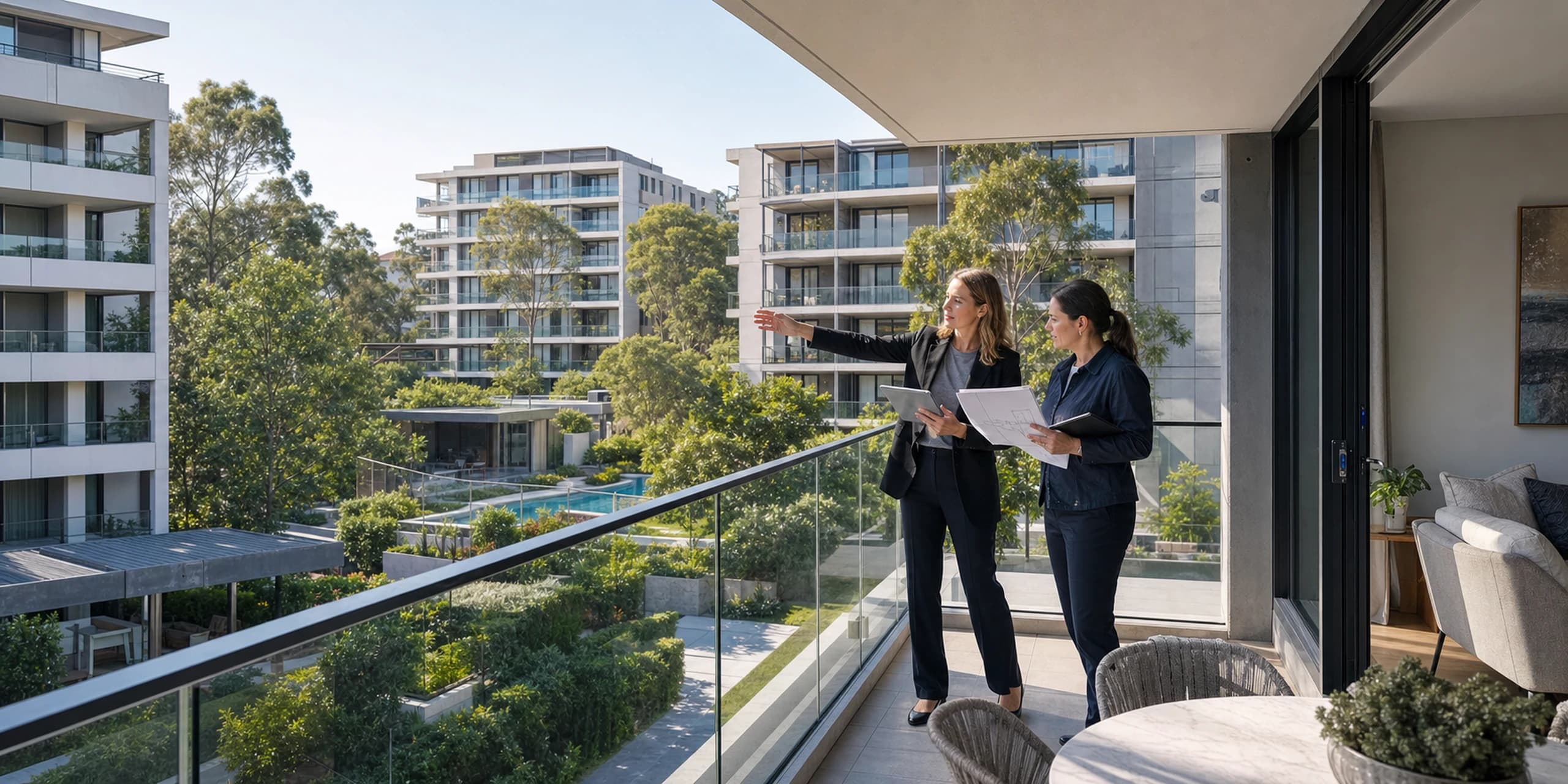
Apartments and units are valued the same way as any property, by assessing their market value, but the factors that drive that value are quite different from a house. Because a unit sits inside a strata building, its value depends heavily on the building itself, the size and position of the unit, and the strata finances, rather than on land. Valuers rely mainly on comparable sales of similar units, ideally in the same or nearby buildings.
How are apartments and units valued?
The main method for valuing an apartment is direct comparison. The valuer looks at recent sales of similar units, gives most weight to sales in the same building or very comparable buildings nearby, and adjusts for the differences between those units and yours.
That reliance on close comparables is why apartment valuations can be quite precise in a large complex with regular sales, and harder in a small or unusual building where few units have traded recently. The more genuinely comparable the recent sales, the more reliable the figure.
Why units are valued differently from houses
When you buy an apartment, you own your individual lot plus a share of the common property, expressed as a unit entitlement, within a strata scheme. Unlike a house, there is very little land attached to your title, so land value is not the main driver of what your unit is worth.
That changes the whole basis of the valuation. For a house, the land is often the biggest component of value. For a unit, value comes from the apartment itself and the building it sits in, which is why two units of the same size can be worth very different amounts depending on the building, the floor and the outlook.
What drives an apartment's value
Several factors combine to set a unit's value:
- Internal size. The internal living area, usually measured in square metres, is one of the strongest drivers.
- Floor level and aspect. Higher floors, good natural light, a pleasant outlook and a quiet aspect all add value; a dark, road-facing or overlooked unit is worth less.
- Layout and features. The number of bedrooms and bathrooms, a car space or storage, and the quality of the kitchen and finishes.
- Building quality and age. The construction quality, age, presentation and any defects in the building affect every unit in it.
- Amenities. A lift, security, a pool or gym can add value, though they also tend to raise strata fees.
- Location. Proximity to transport, shops, employment and lifestyle amenity, as always.
The role of strata: fees and building health
One thing that sets apartments apart is the strata scheme, and buyers pay close attention to it. High body corporate fees eat into the appeal of a unit, and a looming special levy or an underfunded sinking fund, the fund that pays for major building works, can knock real money off what buyers will pay.
The opposite is also true: a well-run building with healthy finances, sensible fees and no major issues supports value. Because these things are visible in the strata records, they feed directly into both what buyers offer and what a valuer concludes.
What can hold an apartment's value back
Some apartments are harder to value and to finance, and it is worth knowing which:
- Very small units. Studios and small one-bedroom apartments can be limited, and some lenders restrict borrowing on units under around 40 to 50 square metres of internal living area.
- High-density or new-development stock. In areas with a lot of similar new apartments, oversupply can weigh on values.
- Building defects. Structural issues, water ingress or cladding concerns can significantly reduce value and make lending difficult.
- Serviced or student apartments. These specialised types often have a narrower buyer pool and can be valued and financed more conservatively.
Comparable sales for units
Because a unit's value leans so heavily on comparables, the quality of that evidence matters. A valuer prefers recent sales within the same building, since those units share the same location, building quality and strata scheme, then broadens to comparable buildings nearby, adjusting for size, floor, aspect and condition. This is the same direct comparison approach used across property, explained in our guide to property valuation methods, applied with a tight focus on like-for-like units.
When you need an apartment valuation
You may need an independent valuation of a unit for the same reasons as any property: buying or selling with confidence, arranging or refinancing a loan, capital gains tax, SMSF, stamp duty on a transfer, or a legal matter. If you are buying, a pre-purchase valuation can confirm you are paying a fair price before you commit, and for tax our guide to property valuation for capital gains tax explains when a valuation is required.
How Valato helps
Valato prepares independent, evidence-based valuations of apartments and units across Australia, using close comparable sales and taking the building and strata position into account. Whether you are buying, selling, refinancing or dealing with a tax matter, you get a defensible market value for your specific unit. You can compare the options or order in a couple of minutes.
Frequently asked questions
How are apartments valued?
Mainly by direct comparison with recent sales of similar units, with the most weight given to sales in the same or very comparable buildings, adjusted for size, floor, aspect, condition and features.
Do strata fees affect an apartment's value?
Yes. High body corporate fees, a looming special levy or an underfunded sinking fund can reduce what buyers will pay, while a well-run building with healthy finances supports value.
Why is my apartment worth less than a house?
Because a unit has very little land attached, and land is often the main driver of a house's value. An apartment's value comes from the unit and the building, not from land.
Does the floor level affect value?
Usually, yes. Higher floors with better light, outlook and less noise tend to be worth more than lower, darker or road-facing units in the same building.
Do banks lend on small apartments?
Often with restrictions. Some lenders limit borrowing on very small units, commonly those under around 40 to 50 square metres of internal living area, and can be more conservative on high-density or defect-affected buildings.
What affects an apartment's value the most?
Internal size, the building's quality and strata health, the floor level and aspect, and recent comparable sales in the building are usually the biggest factors.
Need an apartment valued?
Valato prepares independent, evidence-based valuations of apartments and units using close comparable sales. Just enter the address.
Order a valuationRelated articles.
How to prepare for a property valuation: Australian checklist
A practical Australian checklist covering documents, access, presentation, renovations and what happens when a valuer inspects your property.

Pre-sale (pre-listing) property valuation: should you get one?
A pre-sale valuation gives sellers an independent market value before listing, to set a realistic price, negotiate with evidence and decide with confidence.

Rural and agricultural property valuation
How rural and agricultural property is valued: methods, soil, water rights, carrying capacity and improvements, and when you need a specialist valuer.
Need an apartment valued?
Valato prepares independent, evidence-based valuations of apartments and units using close comparable sales. Just enter the address.
Need an apartment valued?
Valato prepares independent, evidence-based valuations of apartments and units using close comparable sales. Just enter the address.