Rural and agricultural property valuation
Rural and agricultural property is valued quite differently from a suburban home, because much of its value comes from the land's productive capacity, not just its size or position. A rural valuation weighs soil, water, carrying capacity, improvements and access to markets, and it often values components such as water entitlements separately. Because of that complexity, it needs a valuer who specialises in rural property.
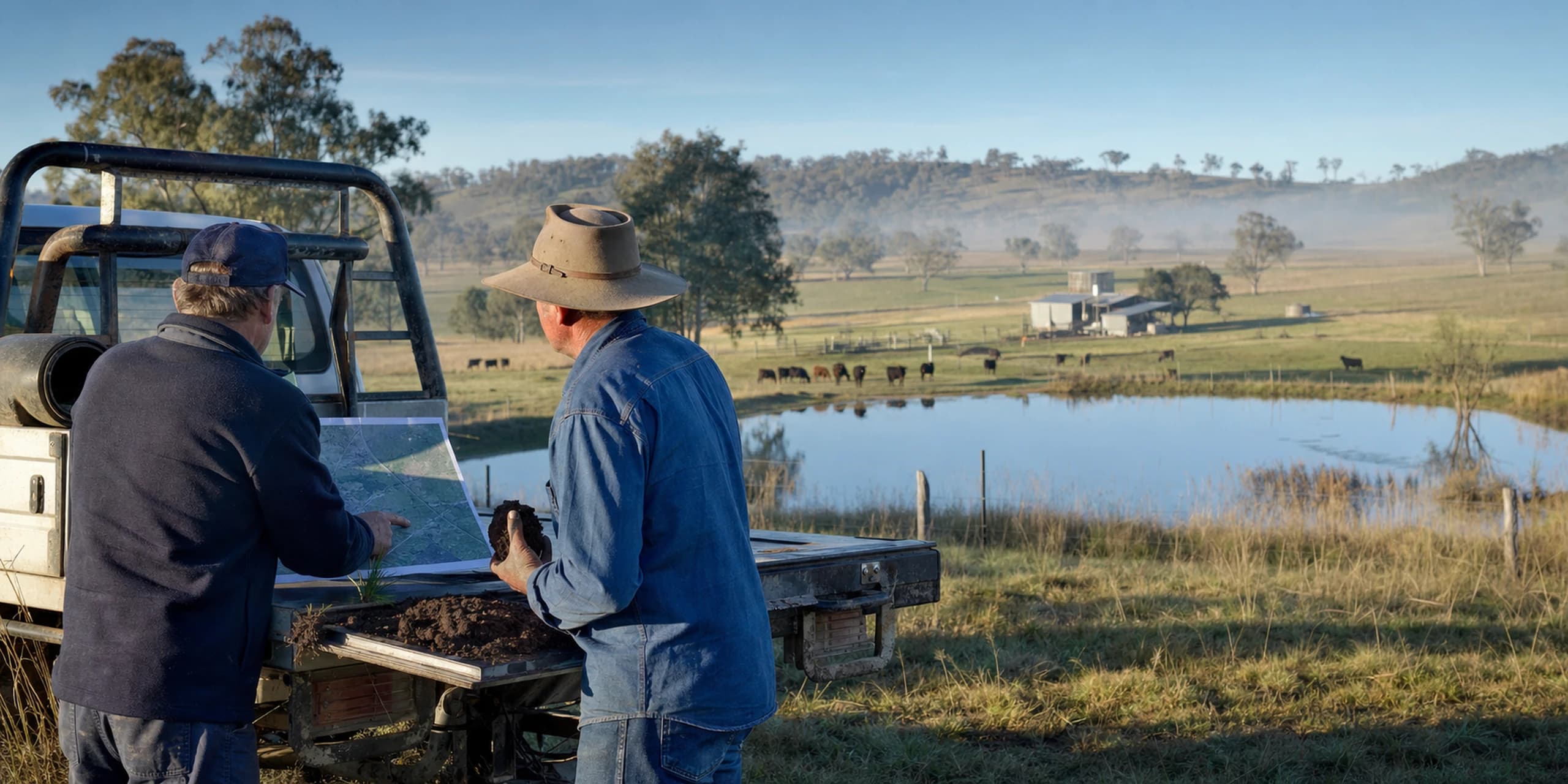
Rural and agricultural property is valued quite differently from a suburban home, because much of its value comes from the land's productive capacity, not just its size or position. A rural valuation weighs soil, water, carrying capacity, improvements and access to markets, and it often values components such as water entitlements separately. Because of that complexity, it needs a valuer who specialises in rural property.
How is rural and agricultural property valued?
At its heart, a rural valuation still answers the same question as any valuation: what is the property worth on the open market. The difference is in what determines that value. For a farm or acreage, the productive potential of the land, the security of its water, and the infrastructure that makes it work are often more important than the raw land area.
A rural valuation typically involves reviewing the property's records, an on-site inspection, an assessment of its agricultural performance, and analysis of comparable rural sales, before the valuer arrives at a documented, evidence-based value.
The methods used
Rural valuers draw on a few recognised approaches, often in combination:
- Direct comparison. Comparing the property to recent sales of similar rural holdings, usually expressed on a per-hectare basis, or per unit of carrying capacity for grazing land.
- The income or productive approach. Valuing the land on the income it can reasonably produce, which suits properties bought as working enterprises.
- Summation. Adding the value of the land to the depreciated value of the improvements, useful where infrastructure is a significant part of the property.
The right approach, or blend of approaches, depends on the property and its use. Our guide to property valuation methods explains these approaches in general terms.
What drives rural property value
Several interconnected factors combine to set the value of a rural property:
- Soil quality and productivity. The inherent productive capacity of the soil is a fundamental driver of value.
- Water. Secure, reliable water access, through licences, irrigation, dams or rainfall, commands a premium, and can be the single biggest value factor.
- Carrying capacity. For grazing land, how many livestock the property can sustainably support.
- Size and topography. Larger holdings can attract a premium through economies of scale, while terrain affects what the land can be used for.
- Location. Proximity to markets, processing facilities and transport corridors influences value.
- Climate and zoning. Rainfall and seasonal conditions, along with zoning and any environmental or protected-area restrictions, shape what is possible and therefore what the land is worth.
Water rights and entitlements
Water deserves its own mention, because in much of rural Australia it is a distinct and valuable asset. Water licences and entitlements can be held, traded and valued separately from the land itself, and on an irrigation property they can represent a very large share of the total value.
A proper rural valuation identifies the water entitlements attached to a property and considers their security and value, rather than lumping them in with the land. Getting this right is often the difference between an accurate valuation and a misleading one.
Improvements and infrastructure
The built improvements on a rural property are more than a house. Fencing, sheds, machinery storage, silos, stockyards, dams, bores, irrigation systems and worker accommodation all contribute to how well the property functions and what it is worth.
A valuer assesses the type, quality, condition and usefulness of this infrastructure, because good, well-maintained improvements support both productivity and value, while run-down or poorly suited infrastructure detracts from it.
Why you need a specialist rural valuer
Pulling all of this together, the productive land, the water, the improvements and the market, takes expertise a general residential valuer does not necessarily have. A specialist rural valuer understands the methodologies and the interconnected factors specific to agricultural property, and knows how to weigh them.
That specialisation matters most where the property is a genuine enterprise, or where water entitlements, carrying capacity or unusual improvements make the value hard to read. The more the property depends on production rather than just land, the more a specialist valuation is worth.
When you need a rural valuation
You may need an independent rural valuation for several reasons:
- Finance. Lending, refinancing or providing loan security over a rural property.
- Family transfer and succession. Passing a farm between generations or restructuring ownership, where an independent value keeps things fair and defensible.
- Tax. Capital gains tax and other tax matters, where a market value at a particular date is required.
- Sale or acquisition. Making sure you buy or sell at a fair, evidence-based value.
For the tax uses in particular, see our guide to property valuation for capital gains tax.
How Valato helps
Valato prepares independent, evidence-based valuations across Australia, including rural and agricultural property, drawing on the productive, water and infrastructure factors that drive rural value. Whether it is for finance, a family transfer, tax or a sale, you get a defensible market value for your holding. If your interest is in bare land rather than a working property, our guide to vacant land valuation may also help. You can compare the options or order in a couple of minutes.
Frequently asked questions
How is a farm valued?
By assessing its market value with a focus on productive capacity: soil, water, carrying capacity, improvements and location. Valuers use direct comparison with similar rural sales, an income or productive approach, and summation of land plus improvements, often in combination.
What is carrying capacity?
It is the number of livestock a grazing property can sustainably support, often expressed in standard stock units. It is a key measure of a grazing property's productivity and a common basis for comparing rural land values.
Are water rights valued separately?
Often, yes. Water licences and entitlements can be held and traded separately from the land, and on irrigation properties they can represent a large share of total value, so a rural valuation identifies and considers them specifically.
Why do rural valuations need a specialist?
Because rural value depends on interconnected factors, productive land, water, carrying capacity and specialised infrastructure, that a general residential valuer may not be equipped to weigh. A specialist rural valuer understands the methods and the market.
Do I need a rural valuation for capital gains tax?
You may. For CGT and other tax matters, a market value as at a particular date is often required, and for a rural property that should come from a valuer experienced in agricultural land. Confirm your position with your accountant.
What improvements add value to a farm?
Well-maintained, fit-for-purpose infrastructure such as fencing, sheds, machinery storage, silos, stockyards, dams, bores and irrigation systems supports productivity and value, while run-down or poorly suited improvements detract from it.
General information only: This article is general in nature and does not take into account your individual circumstances. It should not be relied on as tax, financial or legal advice. Speak with a qualified professional before making decisions about your rural property, tax position or succession plan.
Need a rural property valued?
Valato prepares independent, evidence-based valuations of rural and agricultural property, accounting for land, water and infrastructure. Just enter the address.
Order a valuationRelated articles.

How to prepare for a property valuation: Australian checklist
A practical Australian checklist covering documents, access, presentation, renovations and what happens when a valuer inspects your property.

Pre-sale (pre-listing) property valuation: should you get one?
A pre-sale valuation gives sellers an independent market value before listing, to set a realistic price, negotiate with evidence and decide with confidence.

Property valuation for refinancing and accessing equity
When you refinance, the valuation decides how much equity you can access. How usable equity and LVR work, and what to do if the valuation comes in low.
Need a rural property valued?
Valato prepares independent, evidence-based valuations of rural and agricultural property, accounting for land, water and infrastructure. Just enter the address.
Need a rural property valued?
Valato prepares independent, evidence-based valuations of rural and agricultural property, accounting for land, water and infrastructure. Just enter the address.