How to prepare for a property valuation: Australian checklist
To prepare for a property valuation, gather documents, provide access, record renovations and unique features, tidy the home and address unfinished maintenance. Preparation supports an accurate, efficient valuation process but does not guarantee a higher valuation outcome.
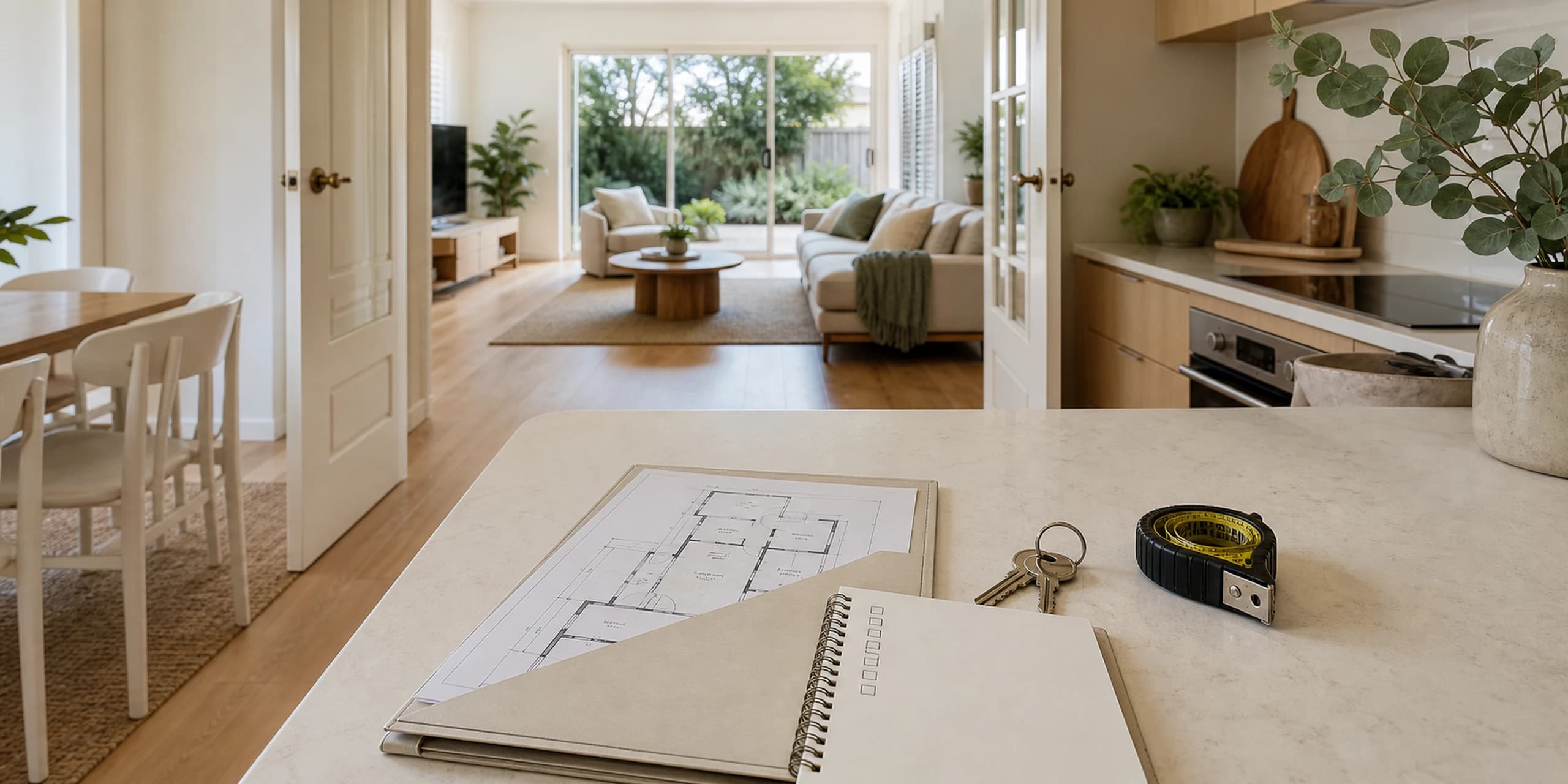
To prepare for a property valuation, gather documents, provide access, record renovations and unique features, tidy the home and address unfinished maintenance. Preparation supports an accurate, efficient valuation process but does not guarantee a higher valuation outcome.
This checklist is for Australian owners preparing a residential property for a formal or bank valuation, refinancing, sale, rental assessment or a pre purchase decision in their home buying journey. It explains what happens during a house valuation and what to give a property valuer.
How to prepare for a property valuation: quick checklist
Help the valuer see the current property, work from accurate information and understand anything not immediately visible.
- Confirm the valuation purpose and report recipient.
- Gather building plans, title deeds, rates notices and council approvals if available.
- List renovations, completion dates and the approximate cost.
- Provide access to every room, garage, shed and relevant outdoor areas.
- Arrange access with tenants, building managers or key employees where necessary.
- Tidy, declutter and complete practical small repairs.
- Note unique features and relevant recent sales.
- Secure pets and allow enough time for the valuer to assess the house properly.
Confirm the purpose and valuation type
Tell the provider why you need the property valuation. The purpose shapes the scope, valuation date and report type.
A home loan lender may appoint property valuers for mortgage security. An owner may order a market valuation, while a court, accountant or government body may require different instructions.
Confirm the client, date, recipient and intended use before the valuer arrives. This helps avoid the wrong scope. The valuation date also matters, as explained in our guide to how long a property valuation is valid.
Gather relevant documents for the valuer
Relevant information and documents help the valuer understand the property, but do not replace the valuer's job.
Building and property information
Provide available building plans, surveys and planning or compliance certificates. Include the legal description, land size and relevant title information.
Rates notices can confirm identifiers, but a council figure is not the value of your property on the open market. The valuer forms an independent opinion.
Renovations and income information
List recent renovations, completion dates and available approvals or warranties.
For an investment property, provide lease details when a rental assessment is relevant. Give the valuer prior notice of complexities.
Provide access for the valuation inspection
Ensuring access is an essential step. Restrictions can prevent verification of the property's condition, layout and best features.
Rooms, improvements and outdoor areas
Unlock gates, rooms, garages, sheds and storage areas. Move objects blocking important improvements, without dismantling fixed items.
Make balconies, yards and other outdoor areas safe. For an apartment, arrange access to relevant common property.
Tenants, pets and other people
Arrange access with tenants or managers early. At business premises, tell key employees when the inspection will occur.
Secure pets and identify safety issues. Clear communication helps the valuer assess the property accurately and thoroughly.
Present the property in its best possible light
A well presented property is easier to inspect and describe, but cleaning alone does not create a higher property's value.
Clean and declutter
Clear floors, benches and access paths. Open curtains where helpful, tidy the garden and remove clutter that hides finishes, room dimensions or the property's current condition.
Aim for a positive first impression, not real estate styling. Land, improvements, location, market conditions and other factors matter more than decor.
Finish minor repairs where practical
Fix obvious issues such as broken fittings, loose handles or incomplete paintwork when the work is safe, lawful and already planned. Unfinished work may be valued on an as-is basis.
Do not begin an expensive renovation just before the inspection. Spending money does not guarantee the same increase in potential selling price or market value. Read more about renovations that add value.
Help the valuer understand unique features
Create a short list of features that may not be obvious during the inspection. Examples include solar equipment, insulation, water storage, upgraded services, views, access rights or quality work completed inside walls.
Point out the facts and provide supporting records. Avoid sales language or claims that a feature must add a particular amount to the valuation outcome.
Share comparable sales carefully
You may give the valuer details of recent sales you believe are relevant. Include the address, sale date and reason the property appears comparable.
The certified valuer will verify the evidence and decide which comparable sales or similar sales deserve weight. A real estate agent appraisal can provide context, but it is not a substitute for an independent valuation report.
What happens during a house valuation?
During an inspection, the valuer records property information about the land, buildings, layout, quality, age, condition and improvements. They may measure areas and take photographs for the report.
After leaving, the valuer researches the current market, analyses similar properties and adjusts for differences. Current market conditions influence the assessment. See how the main property valuation methods work.
The valuer then reconciles the evidence, determines an opinion of market value and completes the final report. They may not provide a figure during the inspection, especially when a lender is the client. Learn what is included in a property valuation report.
What not to do before the valuer arrives
Do not hide defects, restrict access or provide inaccurate information. Missing facts can delay the assessment and weaken confidence in the result.
Do not insist that the purchase price, asking price or online estimate must determine value. A market valuation considers evidence available at the specified date, not the number an owner hopes to achieve.
Do not confuse a real estate appraisal with a formal valuation. Professional associations ensuring competent practice set standards for members, and the Australian Property Institute publishes guidance for qualified valuers.
Preparation for different valuation services
Most properties need the same factual preparation, but the inspection and evidence vary with the service.
| Service | What to prepare |
|---|---|
| AI Evidence Report | Accurate address and property details for a data-based assessment. |
| Signed Valuer Report | Relevant documents, valuation purpose and supporting property information. |
| Certified (in-person) Valuation | Full access, documents, features and a safe inspection environment. |
| Bank valuation | Access requested by the lender and any information the lender permits you to provide. |
Complex properties and prestige properties may require more inspection time and specialist knowledge. Confirm the approximate cost, scope and expected delivery before ordering.
Ready to arrange your valuation?
Preparation cannot control the market, but it can help the valuer understand the property and complete a well-supported report. Choose the valuation type that matches the decision you need to make.
Valato offers fast AI-assisted evidence and reports prepared by qualified valuers. Compare the valuation options or arrange a Certified (in-person) Valuation when the purpose or property requires a full inspection.
Frequently asked questions
Does cleaning increase a property valuation?
Cleaning does not directly change the things a valuation is built on — land size, location and recent comparable sales. What it can do is make the house easier to inspect and help the valuer see its condition and best features clearly: a cluttered room hides the state of floors and walls, and presentation affects how confidently condition can be assessed. Think of cleaning as removing obstacles to an accurate assessment, rather than a lever that raises the figure.
What documents should I give a property valuer?
Useful documents can include building plans, council approvals, title details, rates notices, leases for tenanted properties and records of recent renovations with their costs. These help the valuer confirm what is legally part of the property and what has been improved — an unapproved extension, for instance, is treated very differently from an approved one. Ask the provider which documents are relevant to your purpose; a retrospective CGT valuation and a pre-sale valuation lean on different paperwork.
Should I provide comparable sales?
You can provide similar sales as context, and local knowledge is genuinely useful — you may know about a nearby sale the data has not caught up with yet. But the valuer must verify each transaction, compare it with the subject property attribute by attribute and apply independent professional judgement about which sales are truly comparable. Expect your suggestions to be tested rather than adopted; that independence is precisely what makes the final figure defensible.
How long does the inspection take?
Time varies with property type, size, access and complexity — a standard home inspection is often relatively brief, while larger or more complex properties take longer. The inspection is also only part of the job: the comparable sales analysis and report writing happen afterwards. Arrange access without a tight deadline, make sure all rooms, garages and outbuildings can be opened, and ask the provider what to expect for your assessment so nobody is left waiting.
Can a valuer include planned renovations?
The instructions usually determine whether the valuation is on an as-is basis — the property in its current state — or an as-if-complete basis, its value assuming specified works are finished, which lenders use for construction loans. Do not assume unfinished or proposed work will be included in current market value: on an as-is valuation, a half-finished renovation can even count against the figure. If planned work matters to your purpose, raise it when ordering so the basis is set correctly from the start.
Can I influence the valuation result?
You can help with accurate information, relevant documents and good access — all of which improve the quality of the assessment. What you cannot do is push the figure: a property's valuation changes with its date and evidence, not with the owner's hopes, and valuers are professionally bound to resist pressure to adopt a preferred value. Attempting it tends to be counterproductive; the strongest thing you can give a valuer is evidence, not a target.
General information only: This article is general in nature and does not take into account your individual circumstances. It should not be relied on as tax, financial or legal advice. Speak with a qualified professional before making decisions about your property, tax position or investment strategy.
Ready to arrange your valuation?
Choose the report that matches your purpose, from fast AI-assisted evidence to a Certified in-person valuation.
Arrange a certified valuationRelated articles.

Pre-sale (pre-listing) property valuation: should you get one?
A pre-sale valuation gives sellers an independent market value before listing, to set a realistic price, negotiate with evidence and decide with confidence.
Rural and agricultural property valuation
How rural and agricultural property is valued: methods, soil, water rights, carrying capacity and improvements, and when you need a specialist valuer.

Property valuation for refinancing and accessing equity
When you refinance, the valuation decides how much equity you can access. How usable equity and LVR work, and what to do if the valuation comes in low.
Ready to arrange your valuation?
Choose the report that matches your purpose, from fast AI-assisted evidence to a Certified in-person valuation.
Ready to arrange your valuation?
Choose the report that matches your purpose, from fast AI-assisted evidence to a Certified in-person valuation.