What is included in a property valuation report?
A property valuation report is a formal document, prepared and signed by a registered valuer, that states your property's market value on a given date and sets out the evidence behind that figure. A complete report identifies the property, describes the land and the buildings, explains the valuation method and the comparable sales relied on, lists the assumptions and limiting conditions, and records the valuer's credentials, signature and the valuation date.
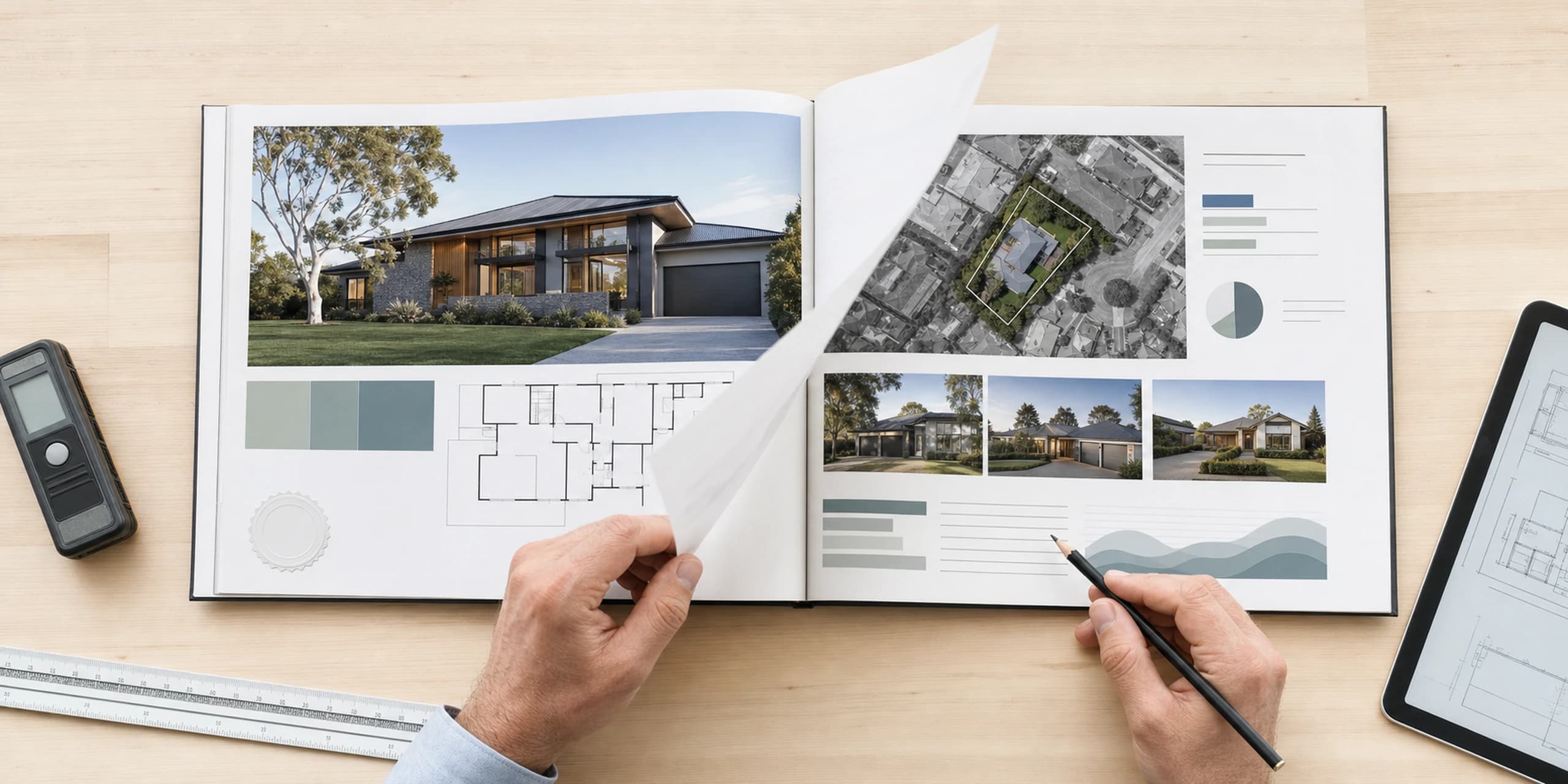
A property valuation report is a formal document, prepared and signed by a registered valuer, that states your property's market value on a given date and sets out the evidence behind that figure. A complete report identifies the property, describes the land and the buildings, explains the valuation method and the comparable sales relied on, lists the assumptions and limiting conditions, and records the valuer's credentials, signature and the valuation date.
What is a property valuation report?
A valuation report is the written output of a professional valuation. A registered valuer inspects or assesses the property, analyses the market, and forms an opinion of its market value, then documents that opinion and the reasoning in a report you can rely on for tax, lending, legal or decision-making purposes.
The report is more than a number. It is a structured, evidence-based document, which is what separates a valuation from a real estate agent's appraisal. The figure is supported by comparable sales, a stated method, and the valuer's professional standing, so it holds up if a bank, the ATO, a court or another party needs to rely on it.
The key sections of a property valuation report
Most Australian valuation reports follow a similar structure. The exact headings vary between firms and report types, but the core components are consistent.
| Section | What it contains |
|---|---|
| Purpose and instructions | Who commissioned the report, and what it is for (sale, mortgage, CGT, SMSF, family law) |
| Property identification | Address, title reference, lot and plan, and the interest being valued |
| Land and site details | Land size, dimensions, zoning, access, topography and any easements |
| Improvements | Description and condition of the dwelling and any other structures |
| Valuation method | The approach used, such as direct comparison, income or cost |
| Comparable sales | Recent, similar sales used as evidence, with addresses, prices and dates |
| Assumptions and limiting conditions | What the valuer assumed and any limits on the report's use |
| Market value | The assessed value, the valuation date, and the rationale |
| Valuer details | Name, registration or CPV status, signature and date |
The sections below explain the ones that most affect how you read and use the report.
Property identification and description
The report first pins down exactly what is being valued. This includes the full address, the title reference or lot and plan number, and the legal interest being valued, usually the freehold.
It then describes the property in two parts. The land and site details cover the land size and dimensions, the zoning and permitted use, street access, topography, and anything affecting the site such as easements, a slope, or a flood overlay. The improvements section describes the dwelling and any other structures, including the age, construction, layout, condition, fixtures and fittings, and additions like a granny flat, pool, deck or shed. This is where the valuer records defects, needed repairs and the general standard of the property, because condition feeds directly into value.
The valuation figure and its basis
The headline of the report is the assessed market value, expressed as at a specific valuation date. Market value means the price a willing buyer and a willing seller would agree in the open market, each acting knowledgeably and without pressure.
The date matters. A valuation is a snapshot of value at that point in time, so the report states the date clearly. Some reports also separate the land value from the value of the improvements, and an investment-focused report may include an assessed market rent or rental yield alongside the capital value.
Valuation method and comparable sales evidence
A defensible report explains how the valuer arrived at the figure, not just what it is. It names the valuation approach used, most often the direct comparison method for residential property, and sometimes the income (capitalisation) approach or the cost approach depending on the property type. Our guide to property valuation methods explains when each applies.
The report then sets out the comparable sales it relied on: recent sales of similar properties in the area, with their addresses, sale prices and dates, and a comparison to the subject property. This evidence is the backbone of the valuation, because it shows the figure reflects what the market is actually paying rather than an opinion in isolation.
Assumptions, limiting conditions and risk ratings
Every professional report includes a section of assumptions and limiting conditions. These state what the valuer assumed (for example, that the title is clear, or that no hidden structural defects exist beyond what was visible) and set limits on how the report can be used, such as the party it was prepared for and the purpose it covers.
Many lender-style reports also include risk ratings. The valuer rates factors such as market volatility, location and neighbourhood, and land or environmental issues on a low-to-high scale. These ratings flag matters a bank or buyer should be aware of, and they are part of why a valuation gives a fuller picture than a headline price.
Valuer details, signature and date
A genuine valuation report names the valuer and records their registration or Certified Practising Valuer status, along with their signature and the date. This is the part that makes it a valuation rather than an appraisal. In several states only a registered valuer may legally prepare a valuation that can be relied on for financial, legal or statutory purposes, so the valuer's credentials are not a formality, they are what gives the report its standing. For more on that distinction, see our comparison of a valuation and a bank valuation.
Why the report format matters
The structure of a valuation report is what lets other parties trust the number. A bank, the ATO, a court or an accountant can see the property that was assessed, the method used, the evidence behind the figure, and who stands behind it. That transparency is the difference between a defensible market value and a guess.
If you need a property valuation report you can rely on for tax, SMSF, estate or lending purposes, Valato prepares independent, evidence-based reports across Australia. You can compare the report options or order in a couple of minutes.
Frequently asked questions
What is the most important part of a valuation report?
The assessed market value and its valuation date are the headline, but the comparable sales evidence and the stated method are what make that figure defensible. Together they show the value reflects the real market.
Is a valuation report the same as a real estate appraisal?
No. An appraisal is an informal estimate, often from an agent, and cannot be relied on for tax, legal or lending purposes. A valuation report is a formal document signed by a registered valuer, with methodology and evidence behind it.
Does a valuation report include comparable sales?
Yes. A proper report lists recent sales of similar properties, with addresses, prices and dates, and compares them to your property. This evidence supports the assessed value.
What are assumptions and limiting conditions?
They are the statements that set out what the valuer assumed when preparing the report and the limits on how it can be used, including who it was prepared for and for what purpose. Reading them tells you the scope of the report.
How long is a valuation report valid?
A valuation is a snapshot at the valuation date, so its usefulness depends on how much the market and the property change afterwards. Lenders and other parties often expect a recent report, and may ask for an updated one if it is more than a few months old.
Who can prepare a property valuation report?
A registered valuer, often holding Certified Practising Valuer status. In several states only a registered valuer may legally prepare a valuation relied on for financial, legal or statutory purposes.
Need a valuation report you can rely on?
Valato prepares independent, evidence-based valuation reports for tax, SMSF, estate and lending purposes. Just enter the address.
Order a valuationRelated articles.
How to prepare for a property valuation: Australian checklist
A practical Australian checklist covering documents, access, presentation, renovations and what happens when a valuer inspects your property.

Pre-sale (pre-listing) property valuation: should you get one?
A pre-sale valuation gives sellers an independent market value before listing, to set a realistic price, negotiate with evidence and decide with confidence.

Rural and agricultural property valuation
How rural and agricultural property is valued: methods, soil, water rights, carrying capacity and improvements, and when you need a specialist valuer.
Need a valuation report you can rely on?
Valato prepares independent, evidence-based valuation reports for tax, SMSF, estate and lending purposes. Just enter the address.
Need a valuation report you can rely on?
Valato prepares independent, evidence-based valuation reports for tax, SMSF, estate and lending purposes. Just enter the address.