How accurate are online property value estimates?
Free online property estimates are a useful starting point, but they are not accurate enough to rely on for a real decision. The estimates you see on property portals are automated figures generated from data and recent sales, so they cannot see inside your home or account for its condition or renovations. Their accuracy varies a lot: reasonable for a standard property in an active market, and unreliable for anything unusual.
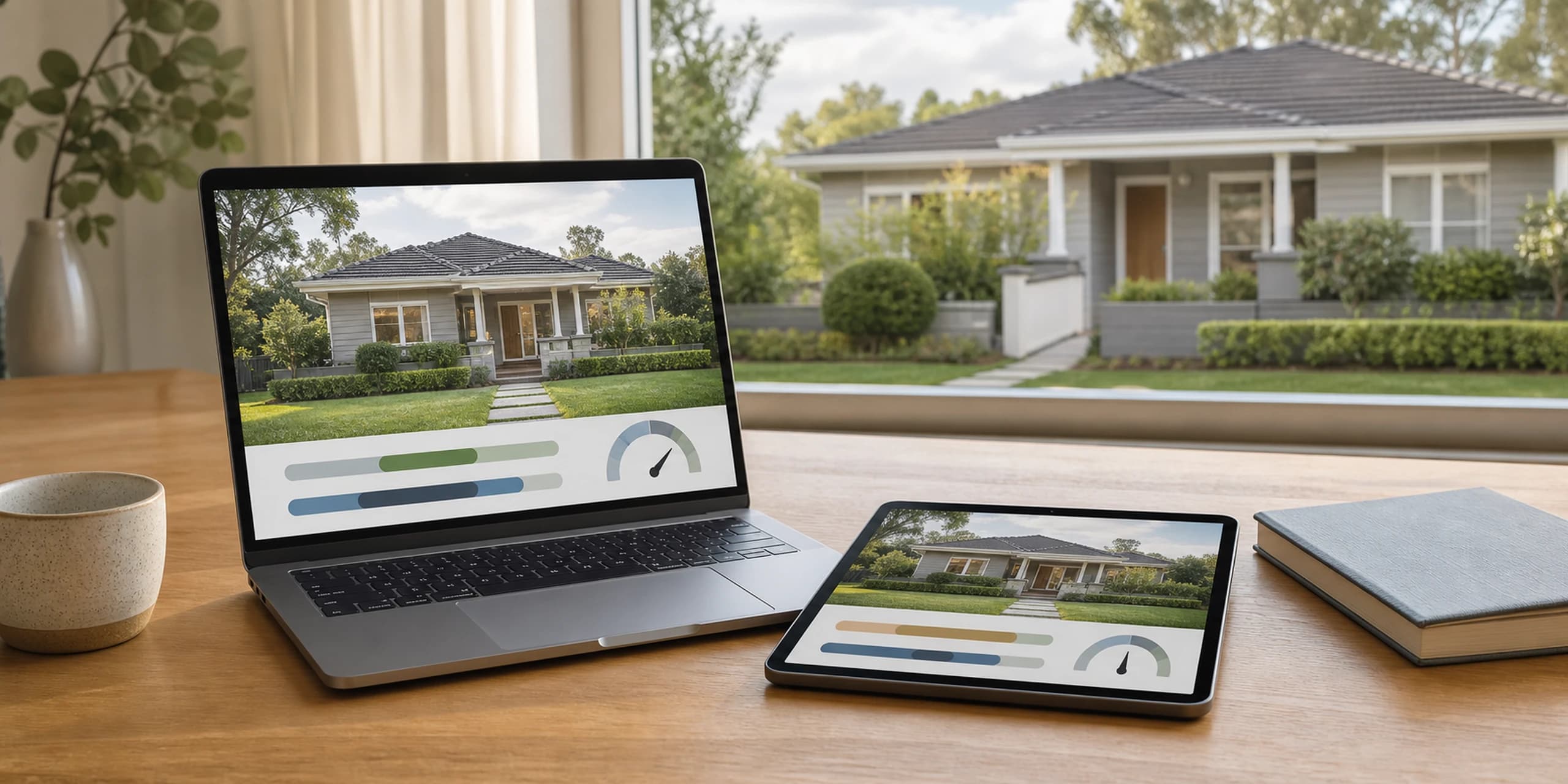
Free online property estimates are a useful starting point, but they are not accurate enough to rely on for a real decision. The estimates you see on property portals are automated figures generated from data and recent sales, so they cannot see inside your home or account for its condition or renovations. Their accuracy varies a lot: reasonable for a standard property in an active market, and unreliable for anything unusual.
How accurate are online property estimates?
The honest answer is: accurate enough to be a ballpark, not accurate enough to bank on. For a typical home in a suburb with lots of recent, similar sales, an online estimate can land reasonably close. For an unusual property, a renovated one, or an area with few recent sales, it can be well out.
The key thing to understand is what these tools are and are not. They are a quick, automated guide to value, and they explicitly are not a valuation. They are a good place to start a conversation about what your property might be worth, not a figure to make a financial decision on.
How online estimates work
The property value estimates on sites like Domain and realestate.com.au are powered by an automated valuation model. Software analyses data about your property, such as its location, land size and attributes, along with recent comparable sales nearby, and produces an estimated value.
In other words, the free estimate is a consumer-facing AVM. It is the same underlying technology lenders use, just packaged for the public. Our guide to what an automated valuation model is explains how these models work in more detail. Because it runs on data alone, the estimate updates as new sales come through, but it never involves anyone looking at your property.
What the confidence level means
Most online estimates come with some indicator of reliability, often a confidence level shown as low, medium or high, or an estimated value range rather than a single number.
That indicator is doing important work. A high confidence level, or a narrow range, usually means there are plenty of recent, similar sales nearby and good data on the property, so the estimate is more trustworthy. A low confidence level, or a wide range, means the model is working with limited evidence, so the figure should be treated with caution. If you only take one thing from an online estimate, take the confidence level as seriously as the number itself.
Why online estimates are often wrong
Because no one inspects the property, an online estimate is blind to much of what actually drives value. Common reasons an estimate misses the mark include:
- It cannot see the condition. A tired, unrenovated home and a beautifully renovated one on the same street can look identical to the model, even though they are worth very different amounts.
- It misses renovations and features. Extensions, a new kitchen, a pool or a knockout view are often invisible in the data.
- Thin markets. In areas with few recent comparable sales, the model has little to work with, so accuracy drops.
- Unusual properties. Acreage, unique architecture, or anything that does not fit the pattern of nearby sales is hard to estimate.
- Data gaps. If the underlying data on bedrooms, land size or building area is wrong or missing, the estimate inherits that error.
When an online estimate is good enough
None of this makes online estimates useless. They are genuinely handy for low-stakes purposes: satisfying curiosity about what your home might be worth, getting a rough sense of your equity, tracking your suburb over time, or starting a conversation with an agent or broker. For those, a free, instant ballpark is exactly right, and there is no need to pay for anything more.
When you need a real valuation instead
The moment a real decision or obligation is involved, an online estimate is not enough. You need a proper valuation when you are making a buying or selling decision on real numbers, arranging finance, or dealing with tax, SMSF or legal matters.
It is also worth knowing where an online estimate sits against the alternatives. It is less reliable than a real estate agent's appraisal, which at least involves local knowledge and often a look at the property, and both are a long way short of a registered valuer's report. Our guides to a valuation versus an agent appraisal and a valuation versus a bank valuation explain those differences.
How Valato helps
If you want more than a ballpark but still want it quickly, Valato's AI Evidence Report gives you a data-driven market value backed by comparable-sales evidence and a confidence score, with a registered valuer reviewing or signing off where it matters. It is the middle ground between a free online estimate and a full inspection: fast, but grounded in evidence and professional judgement. You can compare the options or order in a couple of minutes.
Frequently asked questions
Are online property estimates accurate?
They are a reasonable ballpark for standard properties in active markets, but they can be well out for renovated, unusual or hard-to-compare properties. They are a starting point, not a figure to rely on for a decision.
Why is the online estimate different from the actual sale price?
Because the estimate is generated from data alone and cannot see the property's condition, renovations or features. The real sale price reflects everything the model cannot, including how the property presents and what buyers will actually pay.
What does the confidence level mean?
It signals how reliable the estimate is. High confidence, or a narrow range, means good data and plenty of comparable sales. Low confidence, or a wide range, means the estimate is based on limited evidence and should be treated with caution.
Can I use an online estimate for the bank or for capital gains tax?
No. Lenders rely on their own valuations, and tax, SMSF and legal purposes need an independent, signed valuation. An online estimate is not accepted for any of these.
Which is more accurate, an online estimate or an agent appraisal?
An agent appraisal is usually closer, because it brings local knowledge and often a look at the property, while an online estimate is purely automated. Neither is a substitute for a registered valuer's report.
Why do different websites give different estimates for the same property?
Because each uses its own data and model. Differences in the sales data, property attributes and the way each model works mean two sites can produce noticeably different figures for the same home.
Want a figure you can rely on?
Valato's AI Evidence Report pairs data with comparable-sales evidence and valuer review, fast. Just enter the address.
Order a valuationRelated articles.
How to prepare for a property valuation: Australian checklist
A practical Australian checklist covering documents, access, presentation, renovations and what happens when a valuer inspects your property.

Pre-sale (pre-listing) property valuation: should you get one?
A pre-sale valuation gives sellers an independent market value before listing, to set a realistic price, negotiate with evidence and decide with confidence.

Rural and agricultural property valuation
How rural and agricultural property is valued: methods, soil, water rights, carrying capacity and improvements, and when you need a specialist valuer.
Want a figure you can rely on?
Valato's AI Evidence Report pairs data with comparable-sales evidence and valuer review, fast. Just enter the address.
Want a figure you can rely on?
Valato's AI Evidence Report pairs data with comparable-sales evidence and valuer review, fast. Just enter the address.